

It is with great pleasure and anticipation that we present the proceedings of the 2024 International Conference on ESG/CSR and Sustainable Development in Africa (ICESDA). This conference, held annually, serves as a platform for scholars, researchers, practitioners, and policymakers from across the globe to come together and exchange knowledge, insights, and innovative ideas on pressing issues related to sustainability and development in Africa.
Africa, with its rich cultural diversity, vast resources, and immense potential, stands at a critical juncture in its journey towards sustainable development. The theme of this year’s conference, “ESG/ CSR and Sustainable Development of Africa,” reflects our collective commitment to addressing the challenges and seizing the opportunities that lie ahead. The conference encompasses eight distinct tracks, each exploring a specific facet of sustainable development in Africa, ranging from environmental governance to urban mobility, from social innovations to food security.
Track 1: ESG/CSR and Sustainability of Africa Continental Free Trade Area delves into the factors influencing property tax liability compliance in a resilient economy, with a focus on Lagos, Nigeria. It also examines the modeling of financial distress in the Nigerian banking sector and the implications of China’s infrastructure investments on Africa’s global connectivity.
Track 2: ESG/CSR and Sustainability of Public and Private Sector Institutions in Africa scrutinizes the barriers to sustainable public-works procurement compliance in Ghana and the state of stakeholder management in the sustainability of corporate social responsibility projects in the construction sector. Additionally, it explores the health consequences of climate change on education and sustainable development, and the development of a public value framework for infrastructure projects in Ghana.
Track 3: Social Innovations, Entrepreneurship & Indigenous Knowledge Management in Africa sheds light on the challenges and opportunities in the construction startup ecosystem, analyzes gender issues in the construction industry, and examines the role of indigenous knowledge in fostering social innovations and entrepreneurship.
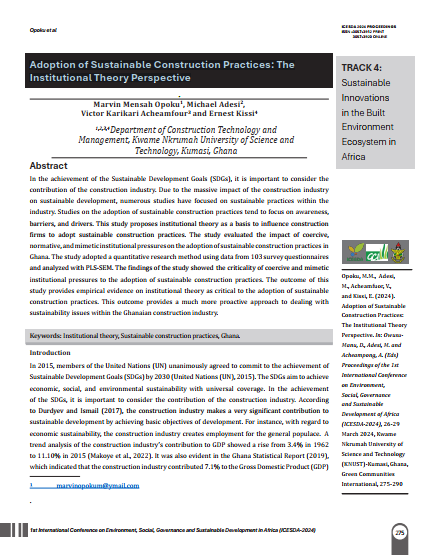
Track 4: Sustainable Innovations in the Built Environment Ecosystem in Africa investigates sustainable practices in road infrastructure projects, leadership development in the Ghanaian construction
industry, circular immersive parametric design workflows for sustainable construction materials, and the features of sustainable electronic procurement beneficial to sustainable project delivery.
Track 5: Sustainable Innovations in Urban Configuration and Mobility in Africa explores coastal management solutions for climate resilience in Ghana, the influence of institutional and behavioral factors on green city development, and the socioeconomic factors impacting the adoption of sustainable energy technologies.
Track 6: Sustainable Innovations in Plastics, Marine Plastics, Textiles, and Microfiber Technology examines innovative approaches to addressing the challenges posed by plastics and microfiber technology, with a specific focus on sustainability.
Track 7: Food Security and Climate-Smart Agricultural Technology in Africa investigates the intersection of food security and climate-smart agricultural technology, recognizing their critical importance in ensuring sustainable development.
Track 8: Environmental and Social Governance Systems for Sustainable Development of Africa analyzes leadership development, corporate governance systems, and the benefits of sustainable corporate social responsibility in the construction business.
These diverse tracks underscore the multidimensional nature of sustainable development and highlight the collective efforts required to address the complex challenges faced by Africa. The papers presented in these proceedings offer valuable insights, cutting-edge research, and practical solutions that can contribute to the formulation of effective strategies and policies for sustainable development in Africa.We extend our heartfelt gratitude to all the authors who have contributed their research and expertise to these proceedings. We also express our appreciation to the organizing committee, reviewers, and conference participants for their invaluable efforts in making this conference a resounding success.May the knowledge shared within these pages inspire further collaboration, innovation, and action, as we strive towards a more sustainable and prosperous Africa.
 Determinants of Leadership Development in an Emerging Economy: The Role Emotional Intelligence
Track 6: Environmental And Social Governance Systems For Sustainable Development Of Africa Aloysius Sam
The Interactive Influence of Institutional and Behavioural Factors on Green City Development
Track 5: Sustainable Innovations in Urban Configuration and Mobility in Africa Africa Alexander Baah Amoakwa
Systematic Review of Major Carbon Emissions Trading Systems Worldwide
Track 4: Sustainable Innovations in the Built Environment Ecosystem in Africa Augustine Senanu Komla Kukah
Stakeholder Management In The Sustainability Of Corporate Social Responsibility Projects – A Systematic Literature Review
Track 2: ESG/ CSR and Sustainability of Public and Private Sector Institutions in Africa Emmanuel Mends Fynn
Socio-Economic Factors Influencing the Adoption of Sustainable Energy Technologies and Practices In Ghana
Track 5: Sustainable Innovations in Urban Configuration and Mobility in Africa Africa Samuel Gyimah
Railway Diplomacy: China’s Infrastructure Investments and Africa’s Global Connectivity
Track 1: ESG/ CSR and Sustainability of Africa Continental Free Trade Area Eugene Ansah Owusu Ampaw
Perception of Ghanaian Construction Employers’ Safety Awareness
Track 4: Sustainable Innovations in the Built Environment Ecosystem in Africa Samuel Kotey
Modelling Financial Distress in the Nigerian Banking Sector
Track 1: ESG/ CSR and Sustainability of Africa Continental Free Trade Area Adeyemi Aderin
Impact of Sustainable Buildings on Housing Development in Ghana
Track 4: Sustainable Innovations in the Built Environment Ecosystem in Africa Benjamin Botchway
Identifying the Features of Sustainable Electronic Procurement Beneficial to Sustainable Construction Project Delivery
Track 4: Sustainable Innovations in the Built Environment Ecosystem in Africa Derrick Alfa
Determinants of Leadership Development in an Emerging Economy: The Role Emotional Intelligence
Track 6: Environmental And Social Governance Systems For Sustainable Development Of Africa Aloysius Sam
The Interactive Influence of Institutional and Behavioural Factors on Green City Development
Track 5: Sustainable Innovations in Urban Configuration and Mobility in Africa Africa Alexander Baah Amoakwa
Systematic Review of Major Carbon Emissions Trading Systems Worldwide
Track 4: Sustainable Innovations in the Built Environment Ecosystem in Africa Augustine Senanu Komla Kukah
Stakeholder Management In The Sustainability Of Corporate Social Responsibility Projects – A Systematic Literature Review
Track 2: ESG/ CSR and Sustainability of Public and Private Sector Institutions in Africa Emmanuel Mends Fynn
Socio-Economic Factors Influencing the Adoption of Sustainable Energy Technologies and Practices In Ghana
Track 5: Sustainable Innovations in Urban Configuration and Mobility in Africa Africa Samuel Gyimah
Railway Diplomacy: China’s Infrastructure Investments and Africa’s Global Connectivity
Track 1: ESG/ CSR and Sustainability of Africa Continental Free Trade Area Eugene Ansah Owusu Ampaw
Perception of Ghanaian Construction Employers’ Safety Awareness
Track 4: Sustainable Innovations in the Built Environment Ecosystem in Africa Samuel Kotey
Modelling Financial Distress in the Nigerian Banking Sector
Track 1: ESG/ CSR and Sustainability of Africa Continental Free Trade Area Adeyemi Aderin
Impact of Sustainable Buildings on Housing Development in Ghana
Track 4: Sustainable Innovations in the Built Environment Ecosystem in Africa Benjamin Botchway
Identifying the Features of Sustainable Electronic Procurement Beneficial to Sustainable Construction Project Delivery
Track 4: Sustainable Innovations in the Built Environment Ecosystem in Africa Derrick Alfa No Books Available!