

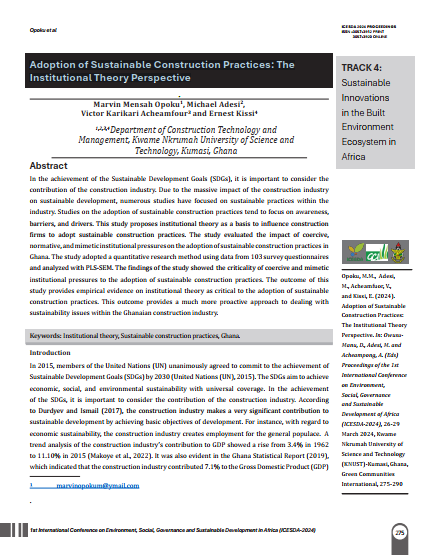
Construction activities affect the environment negatively in terms of dust, noise, waste generation, and major energy consumption. This study aims to investigate how the potential use of Industry 4.0 technologies can mitigate the construction industry’s negative effects on the environment. A quantitative study was conducted among medium to large general contractor (GC) members of the East Cape Builders Association (ECMBA) and design team members such as architects, quantity surveyors (QSs), and construction project managers (CPMs) based in the Nelson Mandela Bay and Buffalo City metropolitan areas. Descriptive statistics were computed from the analysis of the data. The findings include: the top three most energy-intensive activities in the construction industry are building material production, raw material extraction, and building construction, and the need for the application of Industry 4.0 technologies in construction include construction’s high consumption of global energy major waste generation, and negative environmental impacts. Furthermore, prefabricated technologies, wireless sensor networks (WSNs), drones, artificial intelligence (AI), digital twins (DTs), and electronics have the potential to mitigate the negative environmental effects caused by construction projects. Recommendations include the need for improved awareness and education to broaden construction stakeholders’ knowledge regarding the advantages of adopting Industry 4.0 technologies, which have the potential to contribute to mitigating the negative effects on the environment.
Harnessing traditional knowledge and cultural values for environmental protection: a socio-ecological framework for addressing water pollution from illegal mining in Ghana
ICESDA 2025 Maxwell Boateng Asare
The Value of Sustainable Design in Real Estate: A Case Study of the Kwame Nkrumah University of Science and Technology in Ghana
ICESDA 2025 Kenneth Appiah Donkor-Hyiaman
Sustainable Corporate Social Responsibility Practices in the Ghanaian Construction Sector: An Observational Study
ICESDA 2025 Frank Amoah
Sustainable Construction Practices in Tarkwa, Ghana: Adoption, Challenges, and Stakeholder Perspectives
ICESDA 2025 Carin Awoenam Fianu
Subsidy Reform at the Crossroads: Ghana’s Artisanal Fisheries, WTO Commitments, and the Future of Coastal Livelihoods
ICESDA 2025 Shaibu Mustapha
Stakeholder-Driven Tensions in Public Procurement Sustainability: Insights from a Systematic Literature Review in Ghana
ICESDA 2025 Jocilyn Kwame Gyelaa
Managing Stakeholders’ Interests Towards the Sustainability of Corporate Social Responsibility (CSR) Projects – A Paradigmatic and Methodological Review
ICESDA 2025 Fynn Emmanuel Mends No Books Available!
 ICESDA 2025 Full Proceedings